Introduction
Many people have an inherent tendency to look at the world around them and feel like half the reason that they don’t have any personal agency is because of the rules, regulations and social norms that surround them.
The natural reaction to this is wanting to change the world so that there is, in their minds at least, a fairer distribution of personal freedoms. The freedom for anyone to be naked in public for example.
If the world simply understood how beneficial and harmless this activity was, then we wouldn’t have the restrictive laws that we do, nor any of the social stigma associated with nudity.
The reality is, the law is not the actual problem. Nor are other people’s attitudes. Even in countries where mere nudity isn’t a prosecutable offence, public nudity may not be as common or accepted as it could be.
It’s not them
The dialogue that many people use reflects that they tend to project their inner problems outward, disowning them, rather than being honest with themselves and taking personal ownership of the problem.
Technically speaking in New Zealand, nudity isn’t illegal because it’s not an act. Mere nudity isn’t grounds for prosecution. It’s what you do that counts.
So if you set out to offend somebody with your nudity by performing a lewd act, then that’s an offence. It’s the lewd act not the nudity that’s the problem.
If we were to take a simple example of being naked in your backyard, or mowing the lawns naked. Many would exclaim, “Oh no, I couldn’t possibly do that!”
Why not?
“Because my neighbours would be outraged. They wouldn’t have a bar of it!”
This automatically leads those people to believe that if social attitudes changed and everyone understood. Then it wouldn’t be the big problem that it is now. So let’s all jump on that bandwagon and try to change the world so that they understand!
This isn’t an immediately viable option. Many people in naturist communities have tried to turn the tide of public opinion with little to no success. It boils down to a lack of personal agency and the much wider social problems society faces like social poverty and disempowerment.
Language is everything
If we were to take personal ownership of the naked lawn mowing problem and reframe the dialogue so it’s correctly aligned. The language we’d use would be, “I wouldn’t feel comfortable having a conversation with my neighbour explaining why I was mowing the lawn naked.”
It isn’t that they wouldn’t understand. It’s that we as individuals don’t want to take personal ownership and responsibility for our actions and behaviour. We end up in turmoil thinking “there’s nothing wrong with this and it should be allowed.”
If that was truly your unwavering conviction, then you’d follow through on it. The problem is, you don’t wholeheartedly believe that, so it’s easier to project that misgiving outward than own it for what it is.
Ownership is power
I’ve written previously in various blogs and forums, that if you take ownership of your convictions, there are very few limitations other than the ones you place upon yourself.
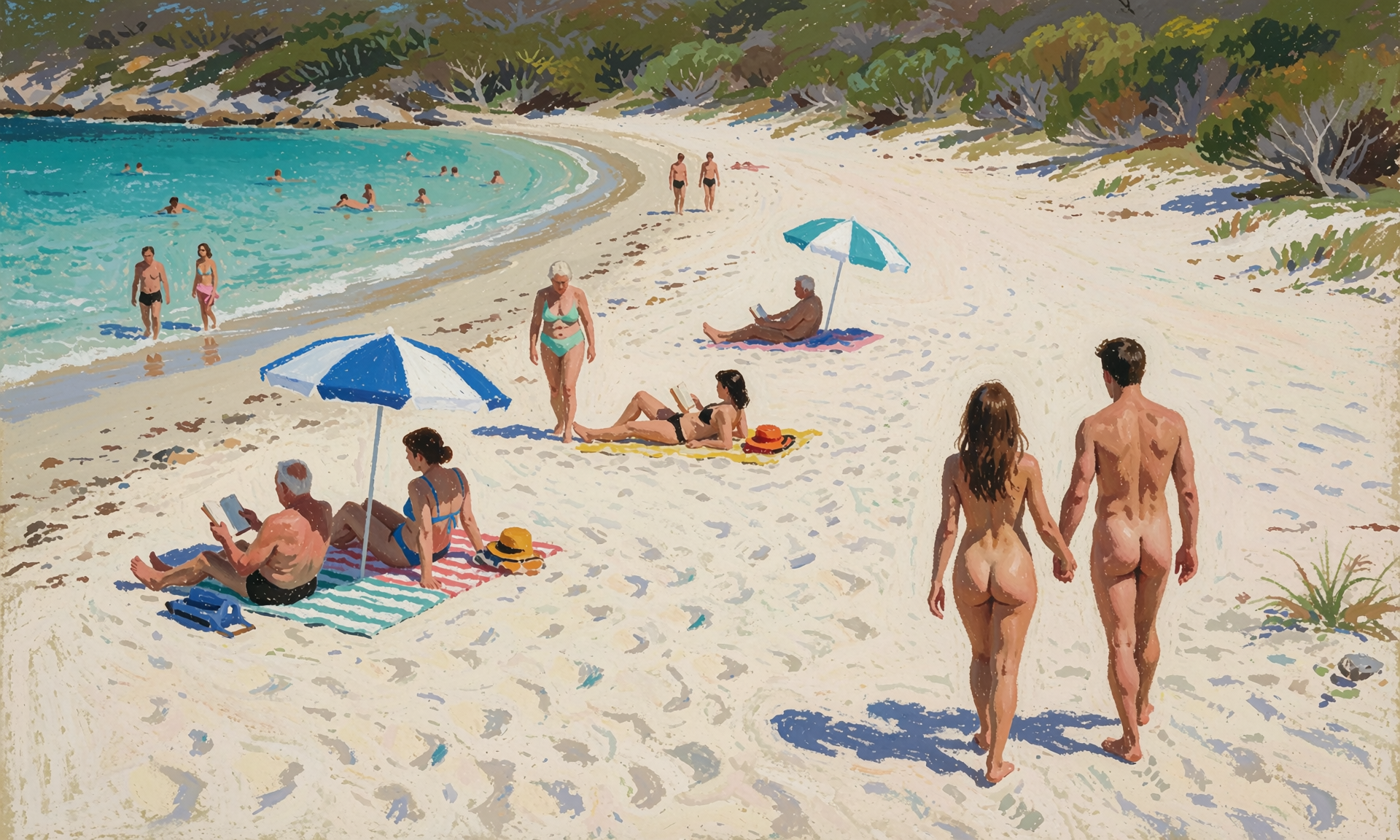
Swimming naked at a public beach is the simplest and easiest example.
If you strip off at a public beach in New Zealand and go for a swim, you’d be surprised how few people take any notice. They either politely pretend not to see you or genuinely don’t notice that you’ve got nothing on.
It’s you that set your own boundaries and deem what is acceptable. It’s your own assessment of any given situation. On a crowded popular beach in the middle of the day, I may well choose not to swim naked. It is however my choice. Not because I’m feeling pressured by social norms around me.
As much as anything it’s a mindset switch. I’m not thinking “I can’t do this because none of these people will let me.” I know with conviction that I’m choosing not to do something in a given moment because it doesn’t feel right to me at that time. It’s my personal limitations that are stopping me.
That might not sound like much of a difference, but it is a huge shift in power and ownership. I’m taking responsibility for my own limitations and that’s hugely empowering.
Owning it
If you switch your mindset to be honest with yourself, you’d be amazed how significantly it reframes challenges to ones you can influence and control.
Many naturists don’t tell people in their lives about their lifestyle. They simply assume that others won’t understand. We actually build things up so much in our own minds that they get blown out of all proportion. We also project our personal limitations and beliefs out into the world and make them reality.
People can’t imagine sharing with their work colleagues that they spent a weekend hiking naked or went to a clothing-optional beach. This is most likely to come out as, “I couldn’t possibly say that, because none of them would understand. They’d think I’m some kind of deviant.”
The truth is, you have doubts in your own mind about how acceptable that behaviour is. If you were honest with yourself you’d say, “I don’t feel comfortable with work colleagues knowing that about me.” “I don’t have the courage to answer their questions or go into more detail about it.” Probably closer to the bone, “I don’t want to risk losing their respect.”
The problem isn’t them or any lack of understanding that they might have. The problem is that you’re not willing to own or take responsibility for your personal limitations.
You can’t change or control other people. You can change and control yourself. If you’re not completely honest with yourself however, you’re not going to see or understand where your actual limitations lie.
You won’t have the ability to reason, “Do their opinions about me really matter that much?” “Would they set aside everything else that they know about me and focus on this one single thing?”
Conclusion
I’ve spent many years around naturism and for the most part, the narrative has remained largely the same over 2-3 decades. “If only the world would see public social nudity for what it really is.”
Meanwhile what the world actually witnesses is a clandestine social clan that begins many of their campaigns with “it’s non-sexual” as if that were the foremost objection in people’s minds.
It’s far more likely they’re thinking “it’s not normal” because they don’t see anyone else commonly doing it.
If you look at any other social trend, like yoga pants, Lycra cycle pants, string bikinis or you name it. Nobody took it up because of a social campaign toting the benefits of these. People simply observed the popularity and commonality around them. This sent an implicit signal of acceptance and before you know it, whoever was comfortable enough to take up the mantle did so.
In New Zealand, nudity, nor even toplessness is illegal at public beaches. Despite this, it simply isn’t commonly seen. Not because of the law. It’s because unlike previous decades when people owned their convictions, people aren’t exercising their legal right to be naked.
Change your internal narrative. Take personal ownership of your values and be part of the change that turns the tide.
Comments or feedback: Send an email